
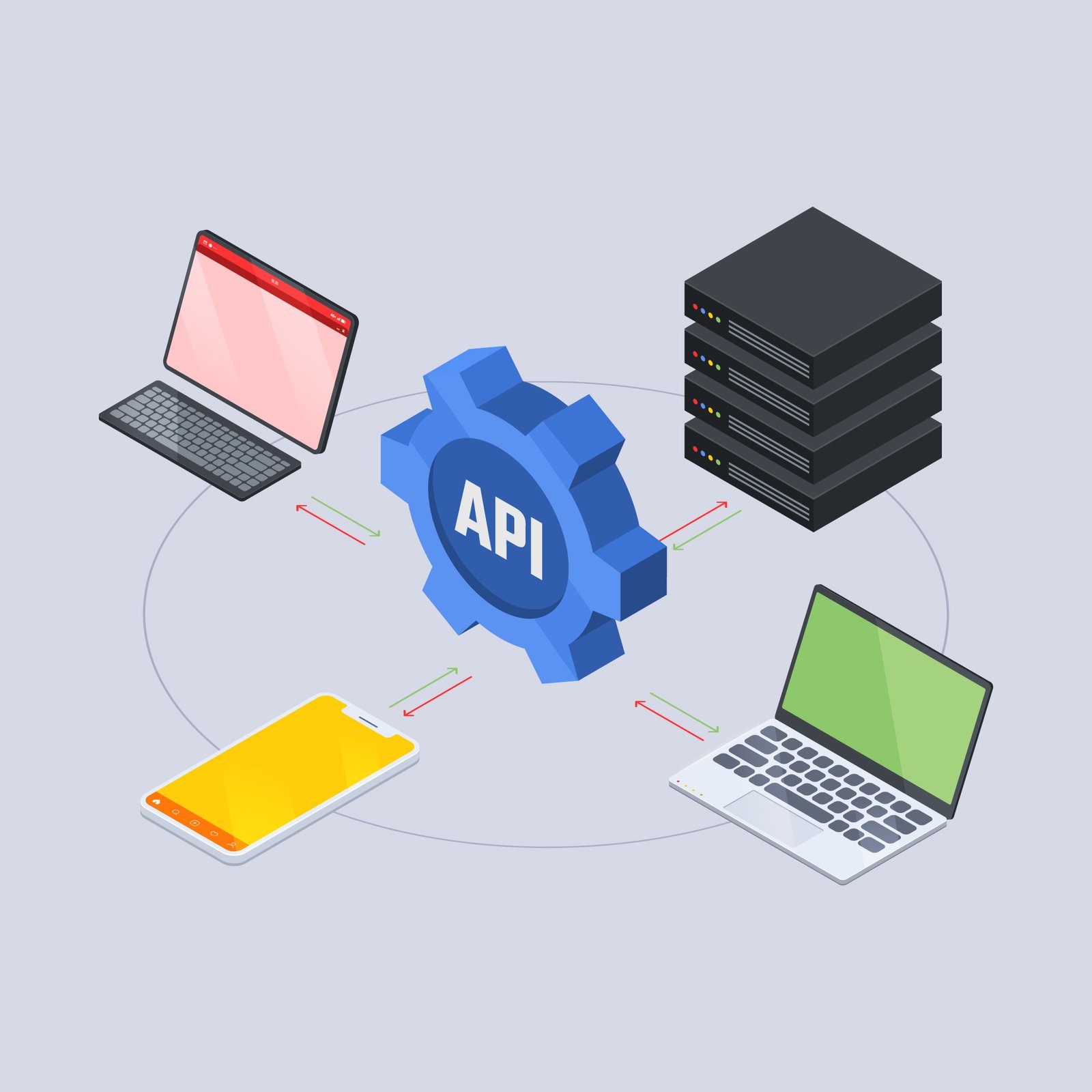
API throttling and rate limiting are related but distinct traffic control mechanisms. Rate limiting sets maximum request quotas within defined time windows (like 1,000 requests per hour), rejecting requests that exceed these hard limits with 429 errors. Throttling, in contrast, slows down request processing by introducing delays or queuing requests when traffic becomes excessive, allowing requests to eventually succeed rather than immediately rejecting them.
However, the distinction between these terms varies across the industry, with many developers and platforms using them interchangeably. Understanding the technical differences, implementation approaches, and appropriate use cases for each mechanism helps you choose the right traffic control strategy for your API infrastructure and user experience goals.
What Rate Limiting Does and Does Not Do
Rate limiting establishes firm boundaries on API consumption:
Hard Request Limits: Rate limiting counts requests within fixed or sliding time windows and enforces maximum thresholds. When clients exceed 100 requests per minute, the 101st request receives an immediate 429 Too Many Requests response without processing.
Immediate Rejection: Requests beyond the limit are rejected instantly without queuing, processing delays, or retry attempts. The API server returns an error response explaining the limit violation and when quota resets.
Quota-Based Access Control: Rate limiting implements tiered service levels where free users get 1,000 requests daily while premium subscribers receive 100,000 requests daily, creating clear consumption boundaries.
Does Not Queue Requests: Unlike throttling, rate limiting never holds requests in a queue or introduces artificial delays. Requests either proceed immediately (within limit) or fail immediately (over limit).
What API Throttling Does Differently
Throttling focuses on controlling request processing speed rather than enforcing hard cutoffs:
Controlled Request Flow: Throttling regulates how quickly the API processes requests by introducing intentional delays, spreading traffic over time even when clients send bursts. If an API throttles to 10 requests per second, the 15th request arriving in one second waits rather than failing.
Request Queuing: Throttling mechanisms often queue excess requests temporarily, processing them as capacity becomes available. Clients experience slower response times rather than immediate rejections.
Gradual Degradation: Instead of the binary success/failure of rate limiting, throttling creates a spectrum where service degrades gracefully under heavy load. Response times increase progressively as traffic grows.
Backpressure Application: Throttling applies backpressure to clients through delayed responses, naturally slowing their request rate without requiring explicit error handling for 429 responses.
The One Key Distinction Worth Understanding
The fundamental difference lies in user experience and system behavior under load:
Rate limiting says “No” immediately when limits are exceeded. Your application receives an error response, must implement retry logic with exponential backoff, and handles the 429 status code explicitly.
Throttling says “Slow down” by accepting requests but processing them more slowly. Your application might not even realize throttling is occurring—it just experiences gradually increasing latency as the API delays responses.
This distinction matters enormously for client application design. Rate limiting requires explicit error handling, retry strategies, and user-facing messages explaining quota exhaustion. Throttling typically needs timeout adjustments and loading indicators but fewer error scenarios.
Why Throttling Can Actually Help User Experience
Many API providers find throttling superior to pure rate limiting for certain scenarios:
Prevents Request Loss: Throttling queues requests temporarily instead of dropping them, ensuring clients don’t lose data or need complex retry logic for transient traffic spikes.
Smoother Client Experience: Users see loading indicators and slower responses rather than error messages, creating a perception of temporary slowness rather than hard failure.
Natural Traffic Shaping: By introducing delays, throttling naturally discourages clients from sending excessive bursts, training well-behaved client applications to pace requests appropriately.
Resource Protection: Throttling protects backend services from overload just as effectively as rate limiting while maintaining higher overall throughput by processing queued requests during idle periods.
Implementation Approaches for Each Mechanism
Rate Limiting Implementation Patterns
Token Bucket for Rate Limiting: Maintain a token bucket per client with fixed refill rate and maximum capacity. Each request consumes one token. When tokens are exhausted, immediately return 429 Too Many Requests.
Sliding Window Counters: Track request timestamps in rolling time windows (Redis sorted sets work excellently). Count requests in the last N minutes/hours. Reject when count exceeds threshold.
Fixed Window Counters: Increment counters per time bucket (per minute, per hour). Reset counters at window boundaries. Return 429 when counter reaches limit within current window.
Distributed Rate Limiting: Use Redis, Memcached, or distributed caches to maintain synchronized counters across multiple API servers, ensuring accurate limits even in horizontally scaled environments.
Throttling Implementation Patterns
Leaky Bucket for Throttling: Queue incoming requests in a bucket and process them at a constant leak rate. When the bucket fills to capacity, either delay new requests or reject them. This smooths bursty traffic into steady streams.
Delay Injection: Calculate current request rate and if it exceeds desired throughput, introduce sleep/delay before processing requests. For example, if clients send 100 requests per second but the target is 50/second, add ~20ms delay per request.
Priority Queuing: Implement weighted queues where premium users’ requests process faster than free tier requests. All requests eventually succeed, but processing order and delays vary by priority.
Adaptive Throttling: Dynamically adjust throttling intensity based on current system load, CPU usage, database connections, or downstream service health. Increase delays when systems are stressed; remove delays when capacity is available.
Common Combinations and Hybrid Approaches
Many production APIs use both mechanisms together:
Rate Limiting + Throttling: Set hard daily quotas with rate limiting (100,000 requests/day) while applying throttling for short-term bursts (max 50 requests/second). This allows clients flexibility within daily limits while preventing infrastructure overload from sudden spikes.
Tiered Implementation: Apply aggressive throttling to free tier users (processing their requests slowly) while using lenient rate limiting for premium users (high quotas with minimal delays). This approach works particularly well for scalable pricing tiers in API-based SaaS.
Grace Period Throttling: When clients approach rate limits (at 80-90% of quota), begin throttling their requests as a warning. Only apply hard rate limiting after sustained excessive usage.
Geographic Strategies: Use throttling for trusted regions/IPs and strict rate limiting for high-risk geographic areas or VPN/proxy traffic.
Rate Limiting vs. Throttling: Response Behavior
Rate Limiting Response Characteristics
HTTP 429 Status Code: Clients receive immediate rejection with “Too Many Requests” status when limits are exceeded.
Response Headers: Include X-RateLimit-Limit, X-RateLimit-Remaining, X-RateLimit-Reset, and Retry-After headers informing clients about quota status and when to retry.
Zero Processing: The API server performs minimal work—just checking the counter and returning an error. No business logic executes, no database queries run.
Client-Side Retry Logic Required: Applications must implement proper OAuth token handling with exponential backoff, respect Retry-After headers, and handle quota exhaustion gracefully.
Throttling Response Characteristics
HTTP 200 Status Code (Eventually): Requests typically succeed but with increased latency. Clients might experience response times of 2-5 seconds instead of 200ms.
Timeout Concerns: Long throttling delays can trigger client-side timeouts if applications expect sub-second responses but encounter multi-second delays.
Queue Position Indicators: Advanced throttling implementations might include custom headers showing queue position or estimated wait time.
Transparent to Well-Designed Clients: Applications with appropriate timeout configurations may not even detect throttling—they just observe occasional slowness.
Use Cases: When to Choose Rate Limiting
Rate limiting is preferable in these scenarios:
Clear Service Tiers: When you need distinct quotas for free, basic, premium, and enterprise plans with well-defined request limits per billing period. This is essential for usage-based billing models.
Security-Critical Endpoints: For authentication, password reset, or sensitive operations where you want immediate rejection of excessive attempts to prevent brute force attacks and common API security vulnerabilities.
Cost Control: When API calls consume expensive resources (AI model inference, third-party API calls you pay for) and you need strict usage caps to manage costs.
Legal/Compliance Requirements: When contracts or regulations mandate specific usage limits and you must enforce them precisely rather than allowing gradual degradation.
Predictable Billing: When API pricing is based on request counts and clients need guaranteed ability to use their full quota without unpredictable delays.
Use Cases: When to Choose Throttling
Throttling works better in these situations:
Burst Tolerance: When you want to accept temporary traffic spikes without rejecting requests, processing them more slowly rather than returning errors.
Backend Protection: When protecting rate-sensitive downstream services (legacy databases, third-party APIs with their own limits) that need consistent, controlled request flow.
Graceful Degradation: When maintaining some level of service under extreme load is preferable to hard failures and error messages.
Public/Unauthenticated Endpoints: For public APIs without user accounts where you can’t implement per-user rate limits but need to prevent infrastructure overload.
Microservices Communication: For internal service-to-service calls where you want backpressure to naturally slow upstream services rather than causing cascade failures.
Industry Terminology Confusion
The terms “rate limiting” and “throttling” are often used inconsistently:
AWS API Gateway: Uses “throttling” to describe what is technically rate limiting—hard request limits that return 429 responses immediately.
Azure API Management: Distinguishes between “rate-limit” (requests per time period) and “quota” (total requests per subscription period).
Kong Gateway: Offers separate “rate-limiting” and “request-size-limiting” plugins but uses “rate limiting” for what includes both concepts.
Common Developer Usage: Many developers use “rate limiting” and “throttling” interchangeably, referring to any mechanism that controls API request volume.
When reading API documentation or discussing traffic control strategies, always verify the specific behavior being described rather than assuming based on terminology alone. For comprehensive guidance, see our complete guide to API design for production systems.
Monitoring and Observability Differences
Rate Limiting Metrics
429 Response Rates: Track percentage of requests receiving 429 errors by endpoint, client, and time period to identify overly restrictive limits or abusive clients.
Quota Utilization: Monitor how close clients are to their limits (percentage of quota consumed) to identify users who might benefit from upgraded plans.
Limit Hit Patterns: Analyze when limits are hit (time of day, day of week) to optimize limit windows or suggest usage pattern changes to clients.
False Positive Detection: Identify legitimate users hitting limits due to reasonable usage spikes, indicating limits may be too conservative.
Throttling Metrics
Request Queue Length: Monitor queue depth to understand how much backpressure is being applied and whether queues are growing unbounded.
Artificial Delay Duration: Track average and P95/P99 delays introduced by throttling to understand impact on user experience.
Processing Rate: Measure actual request throughput compared to target throttle rate to verify throttling effectiveness.
Timeout Rates: Monitor client-side timeouts that might result from excessive throttling delays exceeding client timeout configurations.
Combining Rate Limiting and Throttling for Optimal Results
The most sophisticated API platforms use layered traffic control:
Layer 1 – Infrastructure Throttling: Apply adaptive throttling at load balancers or API gateways based on system health metrics, protecting infrastructure from complete overload.
Layer 2 – Endpoint-Specific Rate Limits: Implement hard rate limits on expensive operations (AI inference: 10/hour), authentication endpoints (login: 5 attempts per 15 minutes), and data export APIs (1 bulk export per day).
Layer 3 – User Tier Rate Limits: Enforce tiered quotas based on subscription level (free: 1,000/day, premium: 100,000/day, enterprise: unlimited). Learn more about implementing role-based access after payment.
Layer 4 – Burst Throttling: Within daily/hourly quotas, apply short-term throttling to smooth out traffic spikes (max 50 requests/second even if hourly quota permits more).
This multi-layered approach provides defense in depth, protecting infrastructure while maintaining fair access and enabling sustainable business models. For scalable REST API architecture, review our guide on designing scalable REST APIs for SaaS applications.
Security Integration with Authentication
When implementing traffic control, consider how it integrates with your authentication layer:
OAuth 2.0 Integration: Combine rate limiting with OAuth 2.0 authentication to enforce limits per authenticated user while applying stricter throttling to unauthenticated requests.
JWT Token Management: Track rate limits using user identifiers from JWT tokens, ensuring accurate per-user quotas even across distributed API servers.
Secure Token Storage: Implement proper JWT storage strategies to prevent token theft that could enable rate limit bypassing through credential sharing.
Cookie vs. LocalStorage: Understanding cookie security advantages helps protect authentication tokens that identify users for rate limiting purposes.
API Design Considerations
Traffic control strategy should align with overall API architecture:
REST vs. GraphQL vs. gRPC: Different API paradigms require different throttling approaches. Review our comparison of REST, GraphQL, and gRPC to understand protocol-specific considerations.
GraphQL-Specific Challenges: GraphQL’s flexible queries complicate traditional rate limiting. See our GraphQL vs. REST for SaaS comparison for specialized throttling strategies.
API Versioning: Maintain consistent rate limiting across API versions while allowing gradual migration. Learn about API versioning strategies that preserve traffic control policies.
Idempotency: For operations requiring retries, implement idempotent API design to prevent double-processing when clients retry throttled requests.
Why Understanding the Distinction Matters
Choosing between rate limiting and throttling—or using both strategically—fundamentally affects your API’s user experience, infrastructure costs, and ability to handle traffic variability. Rate limiting provides predictable, measurable quotas ideal for business models and security, while throttling offers graceful degradation and burst tolerance better suited for user experience and infrastructure protection.
Understanding these mechanisms deeply enables you to design APIs that protect your infrastructure, provide fair access to all consumers, create viable monetization strategies, and maintain excellent service even under unexpected load. Whether you’re building public APIs for thousands of developers or internal microservices for your organization, traffic control strategy is foundational to API success.
For comprehensive API documentation and implementation guidance, explore our complete guide to building document APIs using OpenAPI.
Need expert guidance on implementing the right combination of rate limiting and throttling for your API infrastructure or optimizing existing traffic control configurations? Schedule a consultation with Finly Insights today to build robust, scalable API protection strategies following industry best practices.

Finly Insights Team is a group of software developers, cloud engineers, and technical writers with real hands-on experience in the tech industry. We specialize in cloud computing, cybersecurity, SaaS tools, AI automation, and API development. Every article we publish is thoroughly researched, written, and reviewed by people who have actually worked in these fields.