
Most homeowners underestimate their renovation budget by 20% to 40% before work even begins. Knowing the real numbers upfront saves you from running out of money halfway through. This complete home renovation cost breakdown gives you 2026 pricing for every major project type so you can plan with confidence and avoid expensive surprises.
Quick Facts: Home Renovation Cost Overview 2026
Here is a fast snapshot of what renovation actually costs across different project types and home sizes this year.
| Project Type | 2026 Cost Range |
|---|---|
| Whole house renovation (standard) | $19,500 to $88,400 |
| Whole house renovation (average) | $52,275 for 1,250 to 1,600 sq ft |
| Whole house gut renovation | $100,000 to $300,000 and above |
| Kitchen remodel (minor) | $25,000 to $35,000 |
| Kitchen remodel (mid-range) | $35,000 to $65,000 |
| Kitchen remodel (luxury) | $80,000 to $150,000 and above |
| Bathroom renovation (standard) | $12,000 to $25,000 |
| Bathroom renovation (complete) | $10,000 to $50,000 |
| Bedroom remodel (standard) | $8,000 to $12,000 |
| Living room renovation | $4,000 to $10,000 |
| Exterior renovation | $6,000 to $20,000 |
| Per sq ft (standard updates) | $15 to $60 |
| Per sq ft (luxury finishes) | $100 to $250 |
What Drives Your Home Renovation Cost Up or Down
Your renovation cost depends on five main factors, and understanding each one helps you control your budget before a contractor ever steps through your door.
Scope of work is the biggest driver. A cosmetic refresh covering paint, flooring, and fixtures costs far less than a structural overhaul that moves walls, replaces plumbing, or adds square footage. Every time your scope increases, your cost increases proportionally.
Age of your home matters more than most people realise. Homes built before 1980 regularly hide problems behind walls that only surface during demolition. Outdated wiring, galvanised pipes, and water damage are common. Owners of homes built before 1940 typically spend 50% more on renovation than owners of newer homes.
Location affects both labor and material pricing. Urban areas and high cost of living markets run 15% to 25% above national averages. Rural areas typically come in below national averages.
Finish level shifts costs dramatically. Standard mid-grade materials and finishes land in the $60 to $100 per square foot range. Premium and luxury selections push that to $150 per square foot or higher.
Labor now makes up 30% to 50% of most renovation budgets. General contractors charge $50 to $150 per hour. Plumbers charge $45 to $200 per hour. Electricians charge $50 to $130 per hour. Hiring a general contractor to manage the full project adds 10% to 20% on top of total project cost, but saves you the time and stress of coordinating multiple tradespeople yourself.
Kitchen Renovation Cost Breakdown 2026
The kitchen is the most expensive room to renovate because it combines cabinetry, countertops, appliances, plumbing, and electrical work all in one space.
Where Kitchen Money Actually Goes
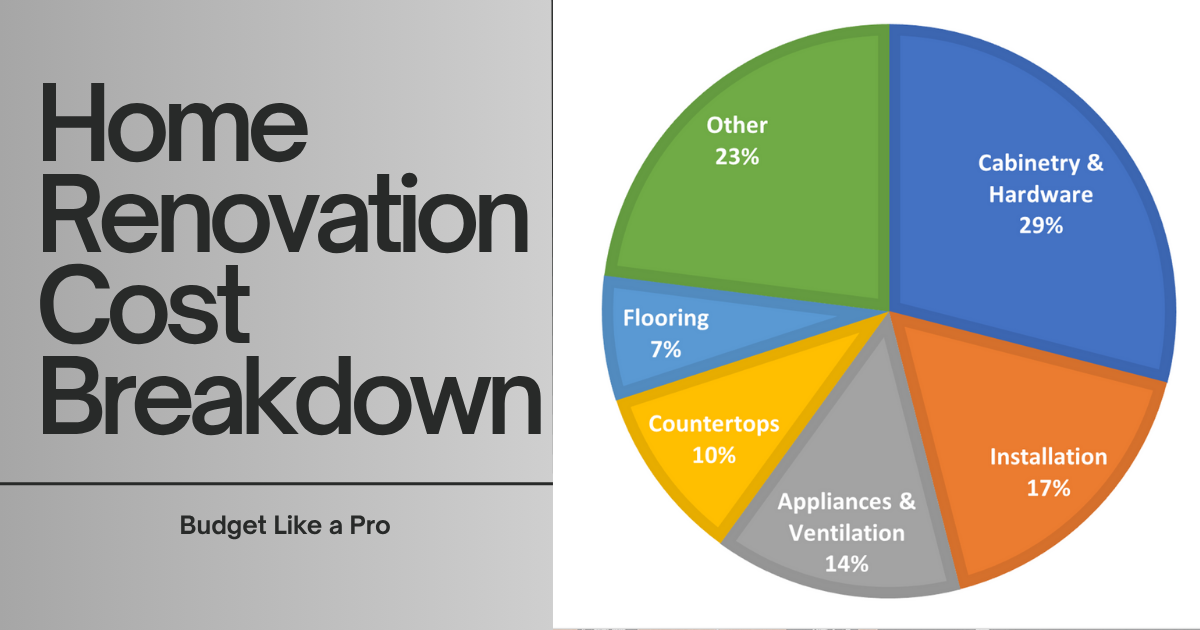
Cabinets consume 25% to 35% of your total kitchen budget. Stock cabinets cost $8,000 to $15,000. Semi-custom options run $15,000 to $30,000. Fully custom cabinetry exceeds $60,000. If you want a completely fresh look without replacing cabinets entirely, painting or refacing them costs $900 to $3,800, a saving of $5,000 to $15,000 compared to full replacement.
Countertops average $1,500 to $5,500 installed. Granite runs $50 to $200 per square foot depending on the slab quality. Quartz delivers a similar look with lower maintenance costs and typically prices in the same range.
Kitchen remodels deliver ROI between 72% and 96% depending on scale. Smaller projects in the $19,000 to $27,000 range consistently outperform large gut renovations at the $50,000 to $85,000 level, which return only 38% to 50% of their cost at resale.
Bathroom Renovation Cost Breakdown 2026
Bathrooms cost $125 to $350 per square foot to renovate, making them one of the priciest rooms per square foot because of intensive plumbing, waterproofing, and tile work involved.
A standard full bathroom renovation covering a 40 to 50 square foot space runs $12,000 to $18,000 for mid-range finishes. This includes a new tub or shower surround, vanity with quartz or granite countertop, updated toilet, tile flooring, new plumbing fixtures, lighting, and ventilation.
A small powder room or half-bath starts at $5,000 to $10,000. A full luxury primary bathroom runs $30,000 to $70,000 depending on size and finish quality.
Floor tile installation costs $10 to $25 per square foot including materials and labor. Shower tile runs $15 to $30 per square foot depending on pattern complexity.
Mid-range bathroom renovations recoup approximately 60% to 73% of their cost at resale. Buyers specifically evaluate bathrooms when assessing a home, which makes updating them a strong financial decision even beyond personal enjoyment.
Whole House Renovation Cost Breakdown 2026
A complete whole-house renovation is where costs vary most widely. The difference between a cosmetic refresh and a gut renovation is enormous.
Cost by Home Size
| Home Size | Standard Renovation | Full Gut Renovation |
|---|---|---|
| 1,000 sq ft | $15,000 to $60,000 | $60,000 to $150,000 |
| 1,200 sq ft | $18,000 to $72,000 | $72,000 to $180,000 |
| 1,500 sq ft | $22,500 to $90,000 | $90,000 to $225,000 |
| 2,000 sq ft | $28,000 to $115,000 | $115,000 to $300,000 |
| 3,000 sq ft | $45,000 to $180,000 | $180,000 to $450,000 |
A 3-bedroom house renovation runs $20,000 to $100,000 for standard upgrades and $40,000 to $180,000 for a 4-bedroom home going through a full overhaul.
If the home is beyond repair, a complete tear-down and rebuild costs $125,000 to $450,000, or $104 to $165 per square foot.
Labor Costs: The Biggest Line Item in Your Budget
Labor is now the single largest cost in most renovation projects and it keeps rising in 2026 as skilled workers remain in short supply.
Hiring a general contractor to manage your entire project costs 40% to 50% of overall renovation cost. That sounds high until you factor in that they coordinate every trade, handle scheduling, manage permits, and take accountability for the finished result. For complex or multi-room projects, this management fee is worth every dollar.
Specific trade costs in 2026:
Plumbing installation or replacement runs $350 to $2,000 on average. A plumber charges $180 to $500 per hour for labor on more extensive work. Full house replumbing pushes well above $2,000 depending on home size.
Electrical work ranges widely. Rewiring a small area starts at $1,500. Full house rewiring runs $10,000 or more. New outlet installation costs $75 to $490 per outlet. Electrical panel upgrades cost around $1,250.
Building permits add $500 to $2,500 for major renovation projects. This is a non-negotiable cost and not one to skip.
Hidden Renovation Costs Most Homeowners Miss
These are the costs that consistently catch homeowners off guard. Budget for every one of them before you start.
Temporary accommodation during a whole-house or major renovation runs $2,000 to $10,000 or more depending on how long you need to be out.
Debris removal and dumpster rental adds $300 to $800 per project week.
Floor plan changes cost $350 to $500 for minor adjustments and exceed $10,000 for major structural changes.
Design fees for architects and interior designers run 10% to 15% of total project cost on complex renovations.
Material price increases in 2026 have added approximately 5.6% compared to 2025 costs across lumber, tile, appliances, and fixtures. Factor this in when comparing quotes from previous years.
Always add 20% to your total estimated budget as a contingency. For homes built before 1980, add 25%. The problems that hide behind old walls are not exceptions, they are the rule.
Which Renovations Give You the Best Return in 2026
Not every renovation dollar comes back to you at resale. Knowing which projects pay off helps you spend where it counts most.
Best ROI projects in 2026: Minor kitchen updates ($19,000 to $27,000 range) return 72% to 96%. Mid-range bathroom renovations return 60% to 73%. Exterior updates and curb appeal improvements return around 80%.
Lower ROI but high personal enjoyment: Luxury kitchen gut renovations at $50,000 to $85,000 return only 38% to 50%. Large primary suite additions average over $339,000 and deliver low percentage ROI. Basement finishing returns 50% to 75% of cost but adds significant usable living space.
The National Kitchen and Bath Association recommends spending 10% to 25% of your home’s total value on a kitchen remodel. Going above 25% typically means you will not recover the full investment when you sell.
Lesser-Known Facts About Renovation Costs in 2026
The renovation market is at record levels in 2026, projected to reach $524 to $526 billion in total homeowner spending. High demand means contractor availability is tight and rates reflect that.
75% of homeowners who completed a renovation report a greater desire to stay in their home and an increased sense of enjoyment in their daily life. The personal value of a well-done renovation consistently exceeds the financial return alone.
One rule that experienced renovators follow is to budget as though you only have 80% of your total funds available. The remaining 20% acts as your contingency. The majority of surprises that push costs over budget appear between demolition and drywall. Getting through that phase intact means you can use any leftover contingency on the finishes you actually want.
In 2026, material costs rose approximately 5.6% compared to the previous year. Tariff pressures on imported building materials, including tile, certain lumber products, and fixtures, continue to push prices higher across most project categories.
Frequently Asked Questions
What is the average cost of a home renovation in 2026?
The average whole-home renovation costs $52,275 for a home between 1,250 and 1,600 square feet. The range for most homeowners runs from $19,500 to $88,400 for standard work. Full gut renovations on larger homes run $100,000 to $300,000 and above depending on scope, finishes, and location.
What percentage of renovation cost goes to labor?
Labor accounts for 30% to 50% of most renovation budgets. If you hire a general contractor to manage the full project, expect their fee to add another 10% to 20% on top of total project cost. Labor costs have risen in 2026 due to continued skilled worker shortages across the construction industry.
How much should I add for unexpected costs in a renovation?
Add 20% on top of your full estimated cost as a contingency before you commit to any scope. Homes built before 1980 should add 25%. Hidden water damage, outdated electrical, and structural problems are found in a large majority of renovation projects once demolition begins.
Which room gives the best return on investment when renovating?
Minor kitchen updates in the $19,000 to $27,000 range deliver the strongest ROI at 72% to 96%. Mid-range bathroom renovations follow at 60% to 73%. Exterior projects including siding and curb appeal improvements average around 80% ROI. Large luxury kitchen renovations and major additions consistently deliver the lowest percentage returns.
Is $100,000 enough to renovate a whole house in 2026?
It depends on your home size and what you are trying to do. For a home under 1,500 square feet, $100,000 covers a thorough mid-range renovation including kitchen and bathrooms with standard finishes. For larger homes or those needing structural work, $100,000 gets you through one or two rooms done properly. Prioritise the kitchen and primary bathroom first as they deliver the highest return and the most daily impact.

We have experienced article publishers with a strong background in digital media, SEO writing, and content strategy. Skilled in creating engaging, well-researched, and reader-focused articles that drive traffic and build authority. Passionate about delivering high-quality content across diverse niches, maintaining editorial standards, and optimizing every piece for maximum reach and impact.